A mother feeds her son while holding a carton of UHT milk. Message: "My child has constipation. What should he eat?" For children aged 1–3 years, by Piyada Ajprajan, Registered Dietitian

What should a constipated child eat?

A guide to help parents choose the right foods for children ages 1–3 to help their little ones have smoother bowel movements

Children aged 1–3 years who are constipated should receive age-appropriate food and dietary fiber and drink enough water. Parents should choose vegetables cooked until tender, whole fruits, unrefined grains, and well-cooked legumes to add to their meals, and encourage daily routines that promote bowel movements without pressure. However, parents do not need to rush to switch to “constipation-relief milk” every time their child has difficulty passing stool. However, if a child has chronic constipation, parents should consult a pediatrician as well[1]

Constipation in children—characterized by hard stools and pain during bowel movements or straining—is a common condition, affecting up to 12% of children [2]. Parents should pay close attention to their child’s diet and physical activity to help prevent idiopathic constipation.

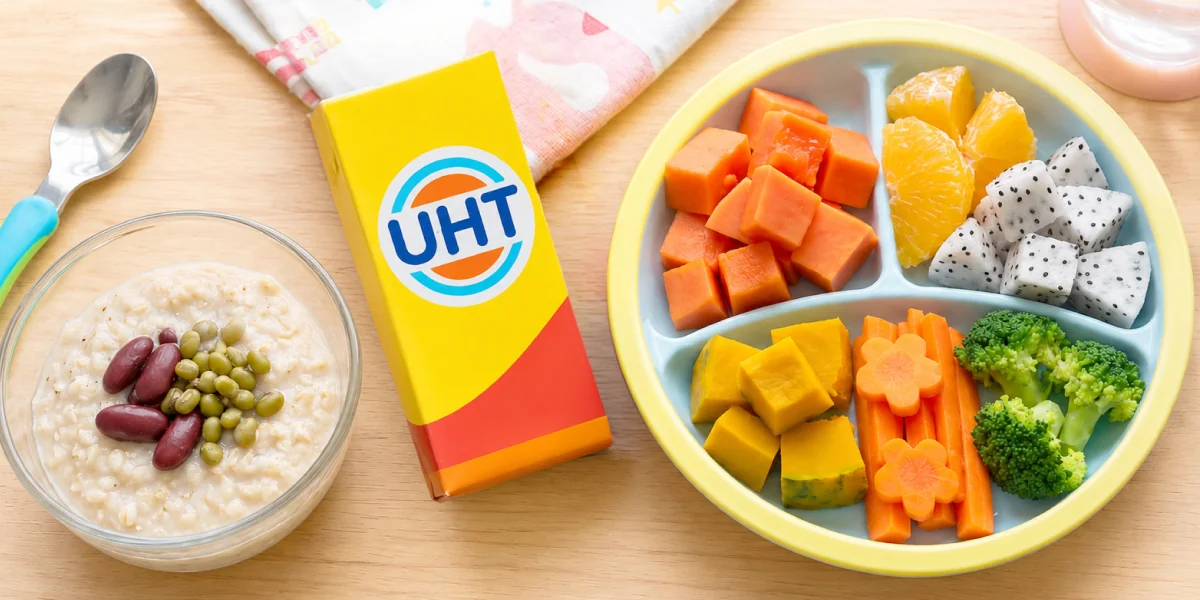
Oatmeal with beans, UHT milk, and a plate of fruits and vegetables for children ages 1–3

What kind of constipation in children is considered “constipation”?

Children aged 1–3 years with constipation may have fewer bowel movements than usual, hard stools, or pain during bowel movements. Functional constipation—a type of constipation with no identifiable underlying medical cause—can be assessed according to the Rome IV criteria, which require the presence of at least two of the following symptoms for at least one month: having fewer than two bowel movements per week; frequent straining during bowel movements; hard stools or pain during defecation; large stool size; or the physician’s detection of a large stool mass retained in the rectum [3,4]

Even if a child has a bowel movement every day, they may still be constipated. If their stools are hard, they have difficulty passing them, or they cry out in pain during a bowel movement, parents should also observe their child’s behavior—such as tensing up, crossing their legs, standing on tiptoes, or clenching their buttocks—as these behaviors may be signs that the child is trying to hold back a bowel movement out of fear of pain during the process[5]

What causes constipation in children?

A common cause of constipation in children aged 1–3 years is “stool-holding behavior.” If a child has previously experienced hard stools or pain during bowel movements, they may feel afraid and try to hold in their stool—for example, because they don’t want to stop playing or are unfamiliar with using a restroom outside the home. As stool remains in the large intestine for longer periods the intestines reabsorb more water, causing the stool to harden and making bowel movementseven more difficult, leading to a cycle of stool withholding and recurring constipation[5,6] Additionally, other factors that may contribute to constipation in children include low intake of fruits and vegetables, insufficient fluid intake, and changes in daily routines—such as potty training, illness, moving to a new home, or starting daycare —which may cause the child to feel stressed or reluctant to have a bowel movement during that time[5,6]. Parents can help their child have easier bowel movements by adjusting their diet and fluid intake and establishing a consistent daily bowel movement routine.

What Should Children Aged 1–3 Eat to Relieve Constipation?

When children aged 1–3 years experience constipation due to holding in their stools [5], parents should choose age-appropriate foods rich in dietary fiber and ensure their child drinks enough water [7]. This will help soften their stools and make bowel movements easier. Here are some ways to adjust their daily diet:

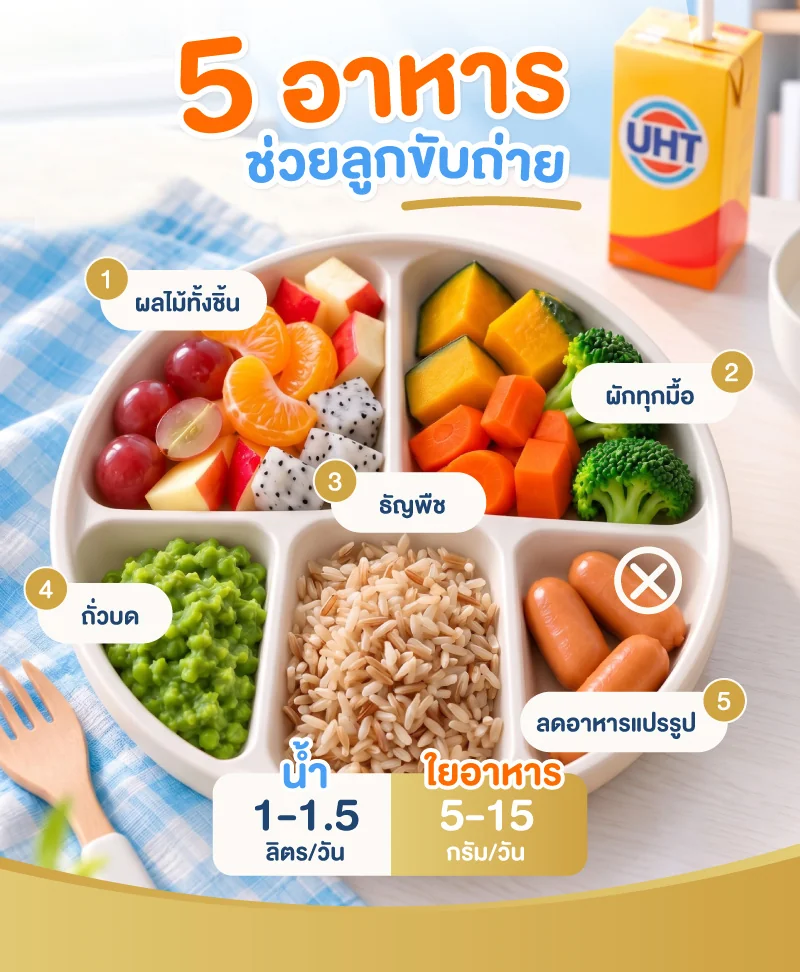
  1. Include whole fruits rich in dietary fiber, such as berries, apples with the skin on, pears, prunes, ripe papayas, oranges, or dragon fruit. Cut them into small pieces or prepare them so that their texture is appropriate for your child’s chewing ability [7]
  2. Have your child eat vegetables every day, such as pumpkin, carrots, broccoli, morning glory, or leafy greens [7], by cooking them until tender and regularly including vegetables in their main meals.
  3. Choose foods or milk that contain dietary fiber, such as soft-cooked brown rice, rice mixed with grains, or oatmeal, as well as milk that contains dietary fiber [7]
  4. Add beans and plant-based proteins, such as red beans, green beans, or lentils [7], by boiling them until tender and then mashing or adjusting the texture to suit the child’s age, to increase dietary fiber in meals.
  5. Cut back on various crunchy snacks, candies, and the sweets your child likes. If your child eats too much of these several times a day, they may refuse to eat nutritious main meals and feel so full that they eat fewer vegetables, fruits, and foods high in dietary fiber. [7]

For children with constipation, ESPGHAN/NASPGHAN recommends a nutritious and varied diet that includes an age-appropriate amount of dietary fiber and fluids, as well as appropriate physical activity. Children aged 1–3 years should consume 5–15 grams of dietary fiber per day [8] It is recommended to choose soft vegetables and fruits that are easy to chew and cut into bite-sized pieces, with an emphasis on leafy greens. Since children’s teeth may not yet be fully developed, they may resist or refuse to eathard vegetables and fruits, resulting in an insufficient daily intake of dietary fiber as recommended.

Infographic: 5 Foods to Help Your Child Have Regular Bowel Movements: 1 Whole fruits 2 Vegetables at every meal 3 Whole grains 4 Mashed beans 5 Reduce processed foods · 1–1.5 liters of water per day · 5–15 grams of dietary fiber per day

My baby has constipation. What kind of formula should parents choose?

When a child is constipated, parents can choose plain cow’s milk, available in both pasteurized and UHT (ultra-high temperature) varieties. Children can drink UHT milk as usual in appropriate amounts, along with age-appropriate foods rich in dietary fiber from vegetables, fruits, and various grains, and should also drink enough water [9] However, most children tend to eat foods low in dietary fiber; they often dislike vegetables because of their bitter taste or unpleasant odor, or they refuse to eat fruit, putting them at risk of not getting enough dietary fiber as recommended. Parents may consider choosing foods or milk fortified with dietary fiber or prebiotics, such as galacto-oligosaccharides (GOS) and fructo-oligosaccharides (FOS), which are water-soluble dietary fibers with prebiotic properties that help promote the growth of beneficial gut bacteria. Studies have found that milk fortified with GOS and FOS helps soften stools and increase the frequency of bowel movements in children Children with constipation should receive additional dietary fiber from various sources—whether food or milk—to increase their daily fiber intake, and they should be encouraged to be more physically active throughout the day [10,11,12]

Piyada Ajprajan, author of the article

Piyada Ajapajarn

Written by:

Registered Dietitian
(Registered Dietitian; RD)

Piyada Ajprajan, author of the article

Piyada Ajapajarn

Registered Dietitian
(Registered Dietitian; RD)

Piyada Ajprajan, author of the article
Written by:

Piyada Ajapajarn

Registered Dietitian
(Registered Dietitian; RD)

reference

  1. 1. Gordon M, de Geus A, Boruta M, et al. European Society for Paediatric Gastroenterology, Hepatology and Nutrition/North American Society for Pediatric Gastroenterology, Hepatology and Nutrition guidelines for the treatment of functional constipation in children aged 0–18 years. J Pediatr Gastroenterol Nutr. 2026;83(2):335-366. doi:10.1002/jpn3.70447.
  2. 2. Youn JW, Joo H, Kim S, et al. Global prevalence of functional constipation across all age groups according to Rome II–IV criteria, 1999–2025: a systematic review and meta-analysis. Clin Transl Gastroenterol. 2026;17(6):e01029. doi:10.14309/ctg.0000000000001029.
  3. 3. Benninga MA, Nurko S, Faure C, Hyman PE, St James Roberts I, Schechter NL. Childhood functional gastrointestinal disorders: neonates and toddlers. Gastroenterology. 2016;150(6):1443-1455.e2. doi:10.1053/j.gastro.2016.02.016.
  4. 4. Thai Society of Pediatric Gastroenterology and Hepatology. Clinical Practice Guidelines for the Management of Constipation in Children, B.E. 2564 [Online]. Bangkok: Thai Society of Pediatric Gastroenterology and Hepatology; 2564 [Accessed Oct. 6, 2569]. Available from: https://www.thaipediatrics.org/wp-content/uploads/2022/04/media-20210917050431.pdf
  5. 5. National Institute of Diabetes and Digestive and Kidney Diseases (NIDDK). Symptoms and causes of constipation in children [Internet]. Bethesda (MD): National Institutes of Health; May 2018 [cited Oct. 14, 2026]. Available from: https://www.niddk.nih.gov/health-information/digestive-diseases/constipation-in-children/symptoms and causes
  6. 6. Cleveland Clinic. Constipation in children [Internet]. Cleveland (OH): Cleveland Clinic; [cited Oct. 5, 2026]. Available from: https://my.clevelandclinic.org/health/diseases/17785-constipation-in-children
  7. 7. National Institute of Diabetes and Digestive and Kidney Diseases. Eating, diet, and nutrition for constipation in children [Internet]. Bethesda (MD): National Institute of Diabetes and Digestive and Kidney Diseases; [cited Oct. 6, 2026]. Available from: https://www.niddk.nih.gov/health-information/digestive-diseases/constipation-in-children/eating-diet-nutrition
  8. 8. Nutrition Division, Department of Public Health, Ministry of Public Health. Recommended Daily Intake of Nutrients for Thais, B.E. 2563 [Online]. Bangkok: Nutrition Division, Department of Public Health, Ministry of Public Health; 2563 [Accessed Oct. 6, 2569]. Available at: https://nutrition2.anamai.moph.go.th/web-upload/6x22caac0452648c8dd1f534819ba2f16c/202101/m_news/9457/176096/file_download/a72848fb8557732574f6afd877a0a0a3.pdf
  9. 9. Centers for Disease Control and Prevention (CDC). Cow’s milk and milk alternatives [Internet]. Atlanta (GA): CDC; April 16, 2026 [cited Oct. 9, 2026]. Available from: https://www.cdc.gov/infant-toddler-nutrition/foods-and-drinks/cows-milk-and-milk-alternatives.html
  10. 10. Boctor D; Canadian Paediatric Society, Nutrition and Gastroenterology Committee. The role of dietary fiber and prebiotics in the pediatric diet [Internet]. Ottawa: Canadian Paediatric Society; June 9, 2020 [reaffirmed Jan. 12, 2026; cited Oct. 22, 2026]. Available from: https://cps.ca/en/documents/position/The Role of Dietary Fiber and Prebiotics in the Pediatric Diet
  11. 11. Das R, Thatal B, Tamang B. Dietary fiber in pediatric gastrointestinal health: a narrative review of evidence and challenges. Clin Exp Pediatr. 2026;69(6):456-72. doi: 10.3345/cep.2026.00276.
  12. 12. van Leusen E, Torringa E, Groenink P, Kortleve P, Geene R, Schoterman M, et al. Industrial applications of galactooligosaccharides. In: Moreno FJ, Sanz ML (eds.). Food oligosaccharides: production, analysis, and bioactivity. Chichester: John Wiley & Sons; 2014. pp. 470–91.
  13. 13. Nutrition Division, Department of Public Health, Ministry of Public Health. 7-Day Meal Plan for Children Aged 1–3 Years [Online]. Nonthaburi: Department of Public Health, Ministry of Public Health; [Accessed Oct. 4, 2569]. Available at: https://nutrition2.anamai.moph.go.th/web-upload/6x22caac0452648c8dd1f534819ba2f16c/filecenter/mother%20and%20child/a7-7.pdf

Frequently Asked Questions

Children aged 1–3 years with constipation may have fewer bowel movements than usual, hard stools, or pain during bowel movements. Even if a child has a bowel movement every day, they may still have constipation. If the stool is hard, passing it is difficult, or the child cries out in pain during bowel movements, parents should also observe their child’s behavior, such as standing stiffly, crossing their legs, standing on tiptoes, or clenching their buttocks. These behaviors may be signs that the child is trying to hold back a bowel movement out of fear of pain during defecation.
A common cause of constipation in children aged 1–3 years is “stool-holding behavior.” If a child has previously experienced hard stools or pain during bowel movements, they may become afraid and try to hold in their stool. Other factors that may contribute to constipation include eating too few fruits and vegetables and not drinking enough water.
Increase your child’s intake of fruits, vegetables, and foods and milk products rich in dietary fiber. Limit snacks like chips and candy, as they can make your child refuse to eat nutritious main meals and feel full.
Parents may consider choosing milk formulas fortified with dietary fiber or prebiotics, such as galacto-oligosaccharides (GOS) and fructo-oligosaccharides (FOS), which are water-soluble dietary fibers with prebiotic properties that help promote the growth of beneficial gut bacteria Studies have found that milk fortified with GOS and FOS helps soften stools and increase the frequency of bowel movements in children.

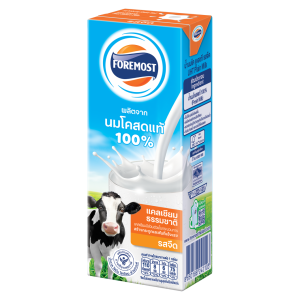
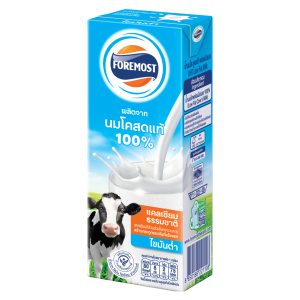
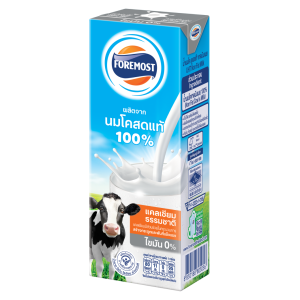
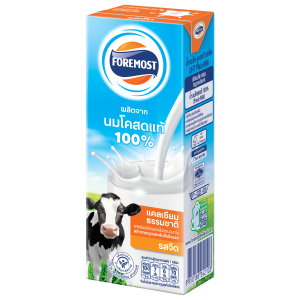
Foremost milk tasteless

Formost Plain Milk, made from 100% fresh cow's milk

Made from 100% real fresh cow's milk.

View more product details

Share

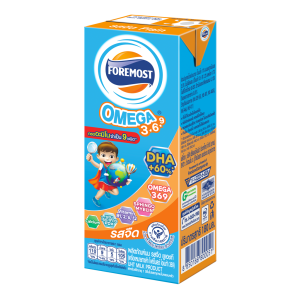
Add to cart now! Get an instant discount of 20 baht per case on Foremost Omega 369 Original Flavor, 180 ml.

Accumulate purchase points, upgrade your membership level, and receive exclusive additional discounts.

The first 220 orders: Spend 2,990.- and get a free Omega Smart Inventor Explorer Table worth 890.-!

Members can use discount coupons at checkout when purchasing items totaling 1,000 baht or more.