Child Development at 1 Year Old: Nutritional Benefits of UHT Milk for Brain Development, Immune System Boost, and Healthy Growth.

Child Development at 1 Year Old: Nutritional Benefits of UHT Milk for Brain Development, Immune System Boost, and Healthy Growth.

Did you know that the nutrients you choose for your child can determine their future? Food and nutrition in young children are fundamental to their long-term health and intelligence, including intellectual intelligence (IQ) and emotional intelligence (EQ). Studies have shown that malnutrition in young children can have negative consequences that continue into adulthood, affecting their health and future economic and social status [1,2].

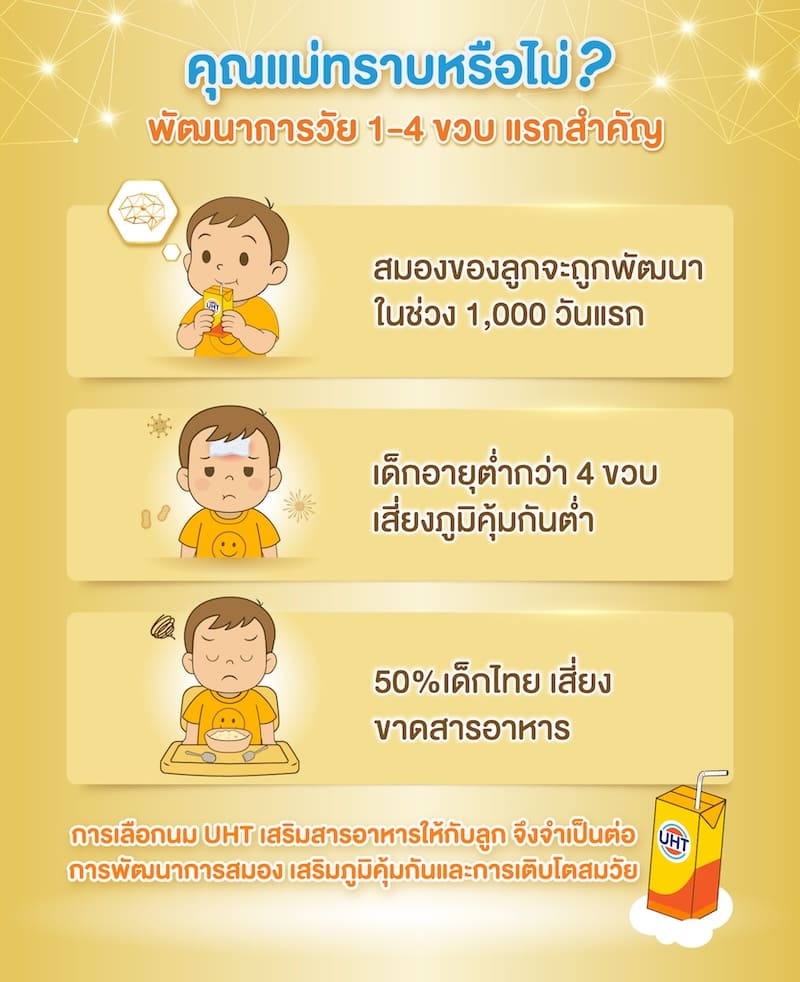
Did you know that the first 1-4 years of a child's life are crucial?

According to a survey by Southeast Asian Nutrition Surveys (SEANUTS), 50% of Thai children are at risk of deficiencies in nutrients such as protein, iron, vitamin B12, and vitamin D [4]. Children under 4 years old have a low chance of having a strong immune system and are at high risk of getting sick because they have not yet developed a complete permanent immunity like adults [22]. Therefore, choosing the right nutrients and sufficient amounts for your child is important. Young children over 1 year old should eat 3 main meals, 2 snacks, and supplement with 2-3 glasses or cartons of plain fortified milk per day.

Recommended nutrient intakes for children at different ages [20,21]

The recommended nutrient intake for children at different ages.
nutrient amount
1 - 3 years 4-5 years
Energy (kilocalories) 980 1200
DED A + EPA (milligrams) 100-150 150-200
Dietary fiber (grams) 3 9
Vitamin C (milligrams) 25 40
Vitamin A (RE) 300 433
Vitamin B1 (milligrams) 1 1
Vitamin B2 (milligrams) 1 1
Calcium (milligrams) 500 700
Iron (milligrams) 5 6

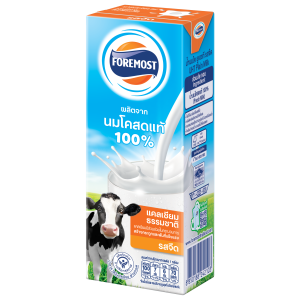
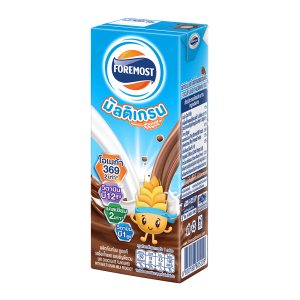
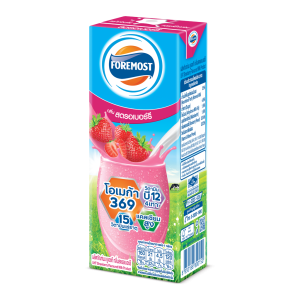
Therefore, fortified UHT milk is essential for supporting brain development, building immunity, and promoting healthy growth in children. When choosing fortified UHT milk, mothers must consider the amount of essential nutrients in sufficient quantities to meet the needs for brain development, immunity, and all three aspects of child growth.

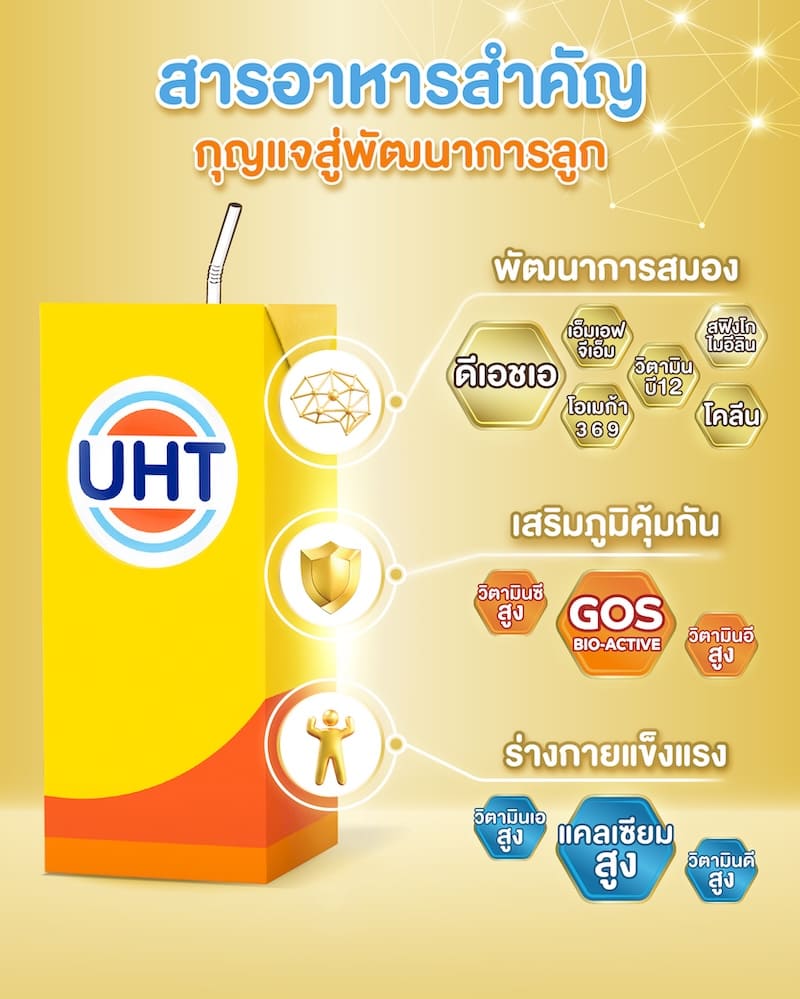
Essential nutrients are key to child development.

Nutrients that affect brain development [9,10]

Data from research in the United States shows that the first 1,000 days are a crucial period for children to receive adequate and appropriate nutrition for brain development, so that children have the foundation for developing analytical thinking, social skills, and emotional management skills appropriately [11].

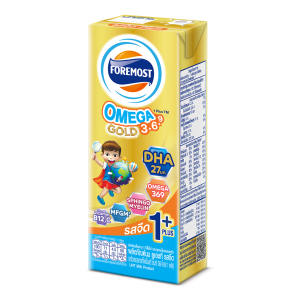
  • DHA and Omega 3 6 9 : are fatty acids that are involved in the development of the nervous system and brain by affecting the strength of nerve cells (membrane integrity), nerve signaling (signaling), which affects the ability to learn, memory and analytical thinking and problem solving [12].
  • Sphingomyelin: It is a phospholipid formed from the combination of fatty acids, glycerol, and phosphate. It is a component of nerve cell membranes and myelin sheaths, helping to strengthen nerve fibers and nerve cell connections [13].
  • MFGM (Milk Fat Globule Membrane) : is a membrane surrounding fat particles found in breast milk. Its structure is composed of various proteins and fats. It functions to aid in brain development, strengthen nerve fibers and nerve cell connections [14].
  • Vitamin B12 : Vitamin B12 helps in the creation of DNA, nerve cells and the formation of myelin sheaths (Myelination) which helps in the connection of nerve cells [8].
  • Choline : Helps in the production of neurotransmitters and myelination [8].

Nutrients that boost immunity

Because a child's immune system is still developing and not as strong as an adult's, it is important to take care of the health and strengthen the immunity of young children during this period. The development of the immune system is gradual, from birth to adulthood. [18]

  • GOS BIO-ACTIVE : Oligosaccharide found in breast milk which is food for healthy microorganisms (prebiotics) helps increase the amount of healthy microorganisms in the large intestine, helps in the functioning of the large intestine, helps in bowel movements, helps the intestine absorb more calcium, iron and magnesium, helps in the prevention and treatment of infectious diseases [15].
  • Vitamin C : is important for the immune system and is an antioxidant. It helps increase iron absorption, aids in tissue repair and growth and collagen. The body cannot synthesize vitamin C, so it must be obtained from food [8].
  • Vitamin E : It is an antioxidant that helps strengthen red blood cells and blood vessels, is a component of cell membranes, and helps boost immunity [8].

Nutrients that affect growth [5,6]

  • Calcium : is a major component of bones and teeth, helps in blood clotting, helps in the functioning of muscles and nerves, causes contraction of general muscle cells, and also helps in the functioning of the heart muscle. Children aged 1-3 years need 500 mg of calcium. Children aged 4-8 years need 800 mg of calcium. [19]
  • Vitamin D : Helps strengthen bones, increases calcium absorption by intestinal cells, and is also a precursor to the production of steroid hormones [8].
  • Vitamin A : Helps with vision, helps with the growth of various cells, the creation of red blood cells, gene expression and also helps strengthen the immune system [8].
In summary, fortified UHT milk is essential and plays a crucial role in supporting child development, brain nourishment, immune system building, and healthy growth. Therefore, mothers need to choose high-quality fortified UHT milk that meets standards and contains more than 5 brain-boosting nutrients, including GOS BIO-ACTIVE and Vitamin C to strengthen the immune system. When children have strong bodies, they are ready to learn to their full potential and grow appropriately for their age.
Dr. Phanida

Dr. Phanida
Saengsak

Written by:

Pediatric Gastroenterologist and Hepatologist
Phyathai 3 Hospital

Dr. Phanida

Dr. Phanida
Saengsak

Pediatric Gastroenterologist
And the liver.
Phyathai 3 Hospital

Dr. Phanida
Written by:

Dr. Phanida
Saengsak

Pediatric Gastroenterologist and Hepatologist
Phyathai 3 Hospital

reference

1. Victoria CG, Adria L, Fall C, Hallal PC, Martorell R, Richter L, et al. Maternal and Child Undernutrition Study Group. Maternal and child undernutrition: consequences for adult health and human capital. Lancet 2008;371(9609):340-57.

2. Galler JR, Bryce C, Waber DP, Zichlin ML, Fitzmaurice GM, Eaglesfield D. Socioeconomic outcomes in adults malnourished in the first year of life: a 40-year study. Pediatrics 2012;130:e1-7.

3. Umaporn Suthatvorawut, Supaporn Tantrachivathorn, Somchok Khunsanong, Editors. Age-Appropriate Nutrition Guide for Infants and Young Children. Project: Developing Guidelines for Healthy Feeding of Infants and Preschool Children. Bangkok: Beyond Enterprise; 2009.

4. Rojroongwasinkul N, Kijboonchoo K, Wimonpeerapattana W, Purttiponthanee S, Yamborisut U, Boonpraderm A, et al. SEANUTS: the nutritional status and delivery intakes of 0.5-12-year-old Thai children. Br J Nutr 2013;110(Suppl3):S36-44.

5. American Academy of Pediatrics. Pediatric Nutrition. Kleinman RE, Greer FR, editors; 2014.

6. Klish WJ, Forbes GB. Chapter 27: Nutritional Requirements. In APP Textbook pf Pediatric Care.

7. World Health Organization. Energy and protein requirements. Report of a joint FAO/WHO/UNU Expert Consultation. Tech Rep Ser. 1985;724:1-206.

8. Higdon J. An evidence-based approach to vitamins and minerals: Health implications and intake recommendations. New York: Thieme Medical Publishers, 2003.

9. Prado EL, Dewey KG. Nutrition and brain development in early life. Nutrition reviews. 2014; 72:267-84.

10. Georgieff MK, Ramel SE, Cusick SE. Nutritional influences on brain development. Acta paediatrica (Oslo, Norway : 1992). 2018;107:1310-21.

11. Cusick SE, Georgieff MK. The Role of Nutrition in Brain Development: The Golden Opportunity of the “First 1000 Days”. J.Pediatr. 2016; 175:16–21.

12. Carlson SE, Colombo J. DHA and Cognitive Development. J Nutr. 2021 Sep 29;151(11):3265–3266.

13. Schneider N, Hauser J, Oliveira M, et al. Sphingomyelin in Brain and Cognitive Development. eNeuro. 2019 Aug 6;6(4).

14. Hernell O, Timby N, Domellof M, Lonnerdal B. Clinical Benefits of Milk Fat Globule Membranes for Infants and Children. J Pediatr. 2016 Jun:173 Suppl:S60-5.

15. Roberfroid M. Prebiotics: the concept revisited. J Nutr. 2007;137(3 Suppl 2):S830-7.

16. Gaucheron F. Milk and dairy products: A unique combination of micronutrients. J. Am. Coll. Nutr. 2011;30:400S–409S. doi: 10.1080/07315724.2011.10719983. [ DOI ] [ PubMed ] [ Google Scholar ]

17. Muehlhoff E., Bennett A., McMahon D. Milk and dairy products in human nutrition. FAO; Rome, Italy: 2013 [Google Scholar].

18. Abbas AK, Lichtman AH, Pillai S. Basic immunology: functions and disorders of the immune system. 5th ed. Philadelphia: Elsevier; 2024.

19. Nutrition Division, Department of Health, Ministry of Public Health. Recommended Daily Nutrient Intake for Thais, 2020. Bangkok: A.V. Progressive Limited Partnership, 2020.

20. Nutrition Division, Department of Health, Ministry of Public Health. https://nutrition2.anamai.moph.go.th/web-upload/6x22caac0452648c8dd1f534819ba2f16c/filecenter/mother%20and%20child/29.pdf

21. Recommended Daily Nutrient Intake for Thais, 2020. https://nutrition2.anamai.moph.go.th/webupload/6x22caac0452648c8dd1f534819ba2f16c/202101/m_news/9457/176096/file_download/a72848fb8557732574f6afd877a0a0a3.pdf

21. Janeway, CA, et al.(2005). Immunbiology, 6th Edition. New York: Garland Science. Figure 11-11. © 2005 Garland Science.
View more product details

Share