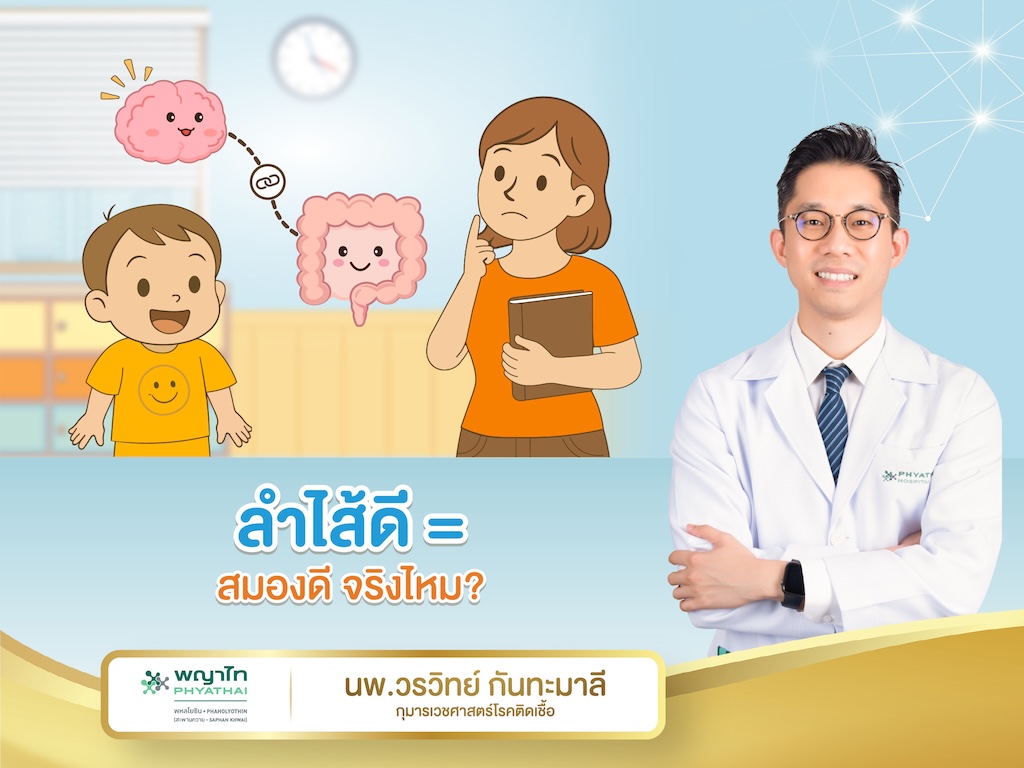
"Healthy gut = healthy brain? Is it true?" The effects of constipation on immunity, mood, and concentration.
Constipation in children is a bigger problem than mothers realize.
Mother:"Whenever my child is constipated... he gets irritable." "He's fussy as if he can't think straight..."
Doctor:Many people may not know that…the brain and the gut communicate constantly. And it's not just talking…there's actually a 'data connection' between them, made up of millions of cells.
The intestines are your child's second brain.
Mother: How are the brain and the gut connected, doctor?
Doctor: The human gut contains over 100 million nerve cells, called the Enteric Nervous System (ENS), which is considered the body's "second brain" [1]. It works independently from the cerebrum but can communicate with it constantly via the vagus nerve. Importantly, 90–95% of serotonin, a key neurotransmitter, is produced in the gut [2] , not in the brain, which has profound effects on your child's mood, concentration, and behavior.
The negative consequences of having poor gut health.
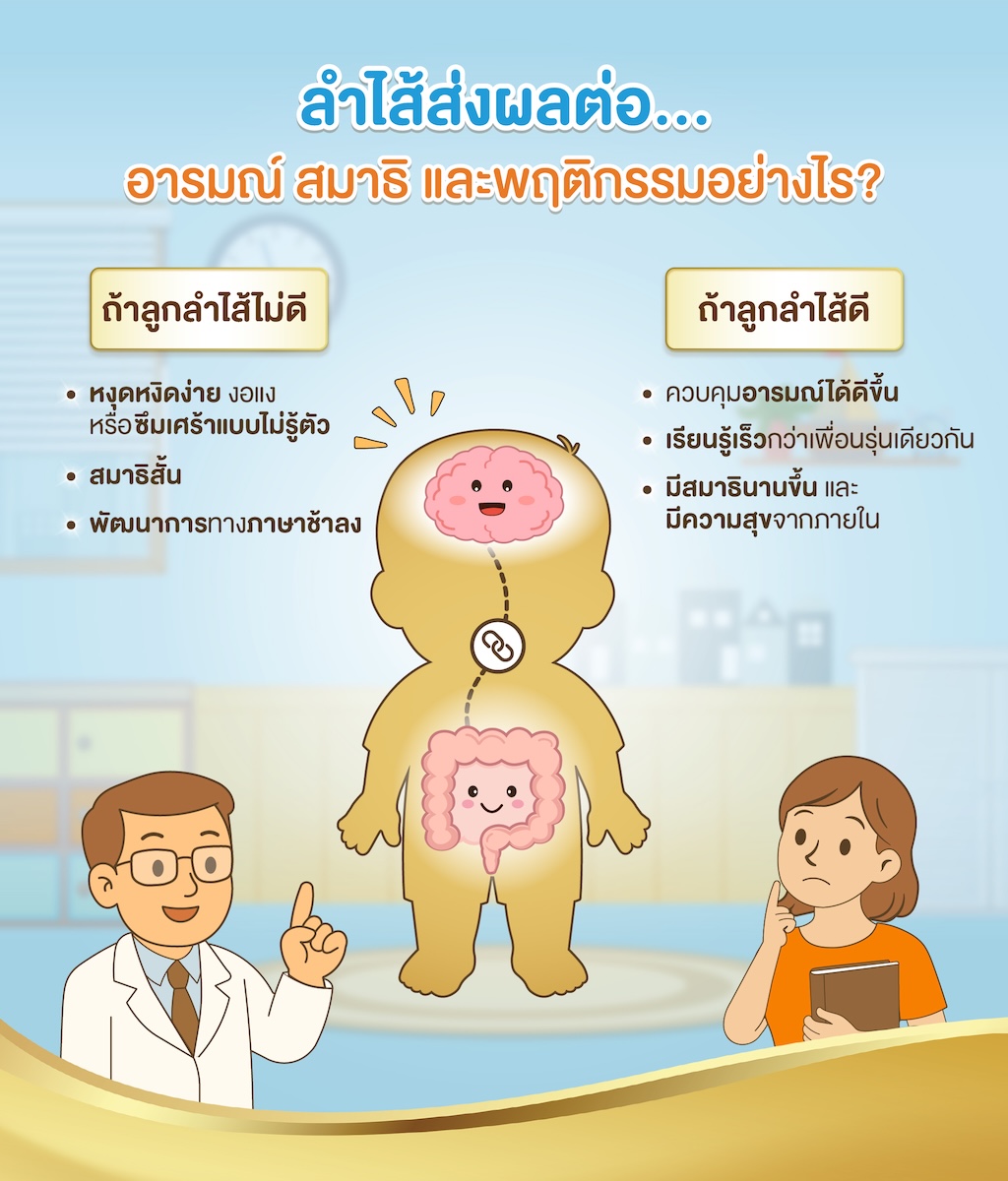
Doctor: When the gut system is out of balance, such as due to dysbiosis or frequent constipation leading to waste accumulation, it affects the production of these neurotransmitters, which in turn affects children…
Easily irritated, grumpy, or unintentionally depressed.
ADHD
Slower language development.
Research has also found that children with functional gastrointestinal disorders have lower blood serotonin levels than healthy children [3].
The benefits of having good bacteria in the gut.
There are over 38 trillion microorganisms in your baby's gut [4]. If they are in good balance (with good strains like Bifidobacterium, Lactobacillus), the gut will be healthy and the brain will be clear, enabling your baby to…
Better control of emotions.
Learns faster than their peers.
Concentrate for longer periods and experience inner happiness.
The doctor would like to summarize:
Therefore, whenever your child is slow to think, fussy, or uninterested in learning, don't just look at their outward behavior, because their "intestines" may be the underlying cause.
Advice from the doctor:
Read the milk label to look for nutrients such as GOS/PDX, or natural dietary fiber.
Observe whether your child has a bowel movement every day, which reflects the balance of their internal systems.
Encourage children to eat brightly colored fruits and vegetables, yogurt, and age-appropriate whole grains.
Avoid overuse of antibiotics, as they kill the good bacteria in the gut.
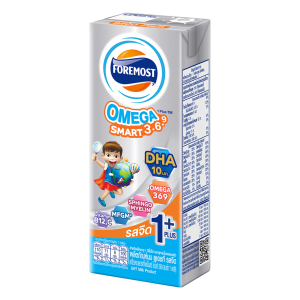
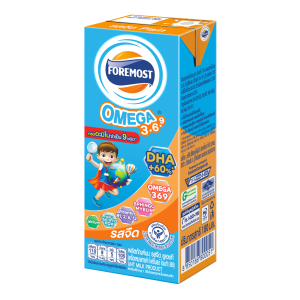
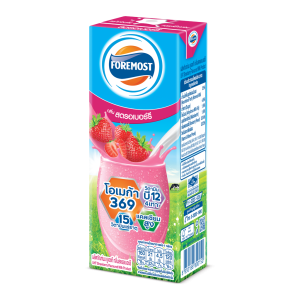
Mothers can choose to give their children UHT milk fortified with GOS prebiotics, which helps boost beneficial gut bacteria, creating a balanced neurotransmitter environment. This helps children think clearly, have a clear mind, be in a good mood, and be ready to learn every day.