Increase your child's height easily by drinking milk with calcium every day.

Help your child grow taller easily by drinking milk rich in calcium every day.

In the past, most people understood that height was a matter of genetics. However, many organizations and research studies now confirm that a child's height during their growth phase is influenced by many factors, not just genetics. Regularly supplementing a child's calcium intake through milk is a simple technique parents can use to encourage their children to drink it daily. This not only contributes to height but also to overall good health.

Getting enough calcium from drinking milk every day is very important for children.

Milk is highly nutritionally important. It contains 18 out of 22 essential nutrients, particularly calcium and protein, which are crucial for growth. When asked how calcium and protein contribute to height, the answer is that both contribute to bone health and muscle repair. When these nutrients work together in the body, combined with a healthy diet, regular exercise, and sufficient rest, a child's height can be increased. In the United States, "milk" (typically cow's milk) has been elevated to the status of an "essential food" to support bone growth in children from weaning onwards, under a government nutrition policy aimed at ensuring all children consume adequate amounts of milk to reduce potential health risks and diseases.

International research confirms the importance of drinking milk.

A recent study in China investigated the effect of calcium on height among children. After a seven-year period, the results showed that boys who consumed less than 327 mg/day of calcium per day tended to be shorter as adults, while boys who consumed more than 566 mg/day showed faster growth rates, independent of physical activity levels .

Another study yielded similar results, finding that the group receiving a higher calcium intake grew 2.5 centimeters taller than the group receiving less calcium within three years .

On the other hand, another study indicated that the nutrients in milk, including calcium, protein, and insulin-like growth factor-1 (IGF-1) (a naturally occurring growth hormone that plays a significant role in children's growth), significantly reduce the incidence of underweight and stunting in children. This further highlights the importance of giving children milk regularly every day .

International research confirms the importance of drinking milk.

The health benefits of cow's milk; it's suitable for people of all ages and can be consumed daily.

Besides the benefits of regular milk consumption for height growth and healthy bone and muscle development in children, cow's milk, the most familiar type of milk to Thais and people worldwide because it's readily available and inexpensive, offers many more health benefits than many people realize. Let's check them out one by one, and you'll understand why milk is something people of all ages should drink.

1. Prevents bone diseases in adults.

For children, regular milk consumption helps build strong bones. For adults, milk consumption is particularly important for strengthening bones, reducing the risk of osteoporosis and other bone diseases such as hip dysplasia and joint degeneration due to low bone mass.² Furthermore, drinking milk strengthens muscles and nerves for efficient function . In addition, regular cow's milk consumption promotes healthy teeth, reducing cavities and other oral health problems.⁷

2. Packed with essential amino acids.

Cow's milk protein is rich in 20 types of amino acids, 9 of which are essential: Histidine, Isoleucine, Leucine, Lysine, Methionine, Phenylalanine, Threonine, Tryptophan, and Valine. These are essential because humans cannot produce them on their own.

Drinking milk is therefore an important source of these amino acids, which have various benefits for the body, such as promoting growth in children, stimulating the digestive system, supporting nervous system function, repairing muscles, stimulating hormone production, and helping to sleep more effectively.

3. Omega-3, 6, and 9 fatty acids are good for your health.

Cow's milk is also rich in omega-3, 6, and 9 fatty acids, and consuming them in adequate amounts plays a significant role in reducing the risk of various diseases, including cardiovascular disease, stroke, paralysis, sudden heart attack, SLE, type 2 diabetes, and Alzheimer's disease, among others. These diseases are particularly dangerous to health, especially for the elderly, whose organ function begins to decline with age and who are more prone to illness. Therefore, a simple way to take care of oneself is to always focus on healthy nutrition.

4. Vitamins and minerals that benefit various organs.

Milk is not just packed with calcium and protein; it also contains a wealth of vitamins and minerals such as selenium, potassium, iron, phosphorus, iodine, folate, vitamins A, B1, B2, B5, B12, D, and K, etc. These nutrients contribute to good health and positively impact the functioning of various organs. Children, teenagers, adults (working adults), and the elderly all need these nutrients, so the importance of drinking milk should never be overlooked.

Help your children grow taller and promote the health of everyone in the family. It's easy to start – just drink milk every day.

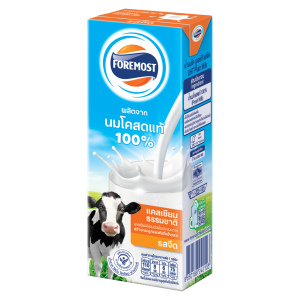
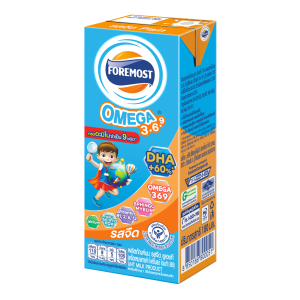
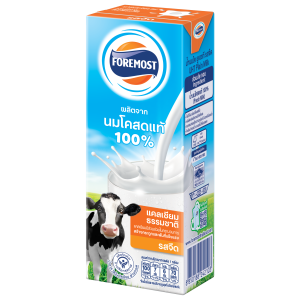
For parents who want to help their children grow taller, simply choose high-quality cow's milk for them to drink regularly every day . "Foremost Plain Milk," made from 100% fresh cow's milk, is the answer, caring for everyone in the family. It's packed with high levels of natural calcium, as well as other nutrients including Vitamin B12, Vitamin B2, phosphorus, and iodine.

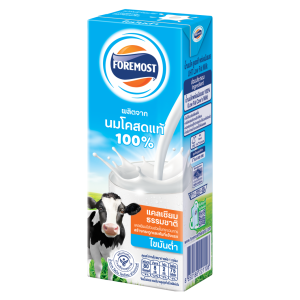
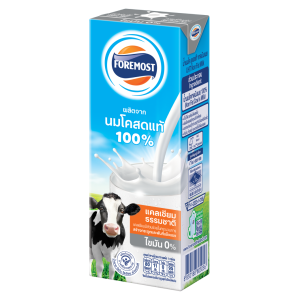
Foremost milk is a premium quality milk that sets it apart from ordinary milk. It adheres to high standards of farming and production directly from the Netherlands, and undergoes testing for antibiotic contamination and over 100 other factors. Foremost plain milk comes in three varieties:

  1. 100% pure cow's milk, unsweetened, high in natural calcium, suitable for children and the whole family.
  2. 100% pure cow's milk, unsweetened, low-fat, high in natural calcium, with over 50% less fat – perfect for health-conscious individuals.
  3. 100% pure cow's milk, unsweetened, 0% fat, high in natural calcium. No worries about fat; ideal for those who want to control their daily fat intake or adults who prefer an easily digestible and stomach-friendly milk.

Interested in purchasing Foremost Plain Milk, 100% pure cow's milk? Click the button below.

reference

1. Xingxia Zhang, Xinrong Chen, et al. “Milk consumption and multiple health outcomes: umbrella review of systematic reviews and meta-analyses in humans.” (2021). https://nutritionandmetabolism.biomedcentral.com/articles/10.1186/s12986-020-00527-y

2. René Rizzoli, “Dairy products and bone health” (2021). https://www.researchgate.net/publication/354426441_Dairy_products_and_bone_health

3. Aiping Fang, Keji Li, et al. “Low Habitual Dietary Calcium and Linear Growth from Adolescence to Young Adulthood: results from the China Health and Nutrition Survey.” (2017). https://pubmed.ncbi.nlm.nih.gov/28831091/

4. Tomoo Okada “Effect of cow milk consumption on longitudinal height gain in children” Am J Clin Nutr. Volume 80, Issue 4 p1088-1089 (2004). https://ajcn.nutrition.org/article/S0002-9165(22)03659-0/fulltext

5. Michael J. Lopez; Shamim S. Mohiuddin, et al. “Biochemistry, Essential Amino Acids” (2024). https://www.ncbi.nlm.nih.gov/books/NBK557845/

6. Milena Savatinova, Mihaela Ivanova. “Functional dairy products enriched with omega-3 fatty acids” (2024). https://www.researchgate.net/publication/379092177_Functional_dairy_products_enriched_with_omega-3_fatty_acids

7. Justin Merritt, Fengxia Qi, et al. “Milk helps build strong teeth and promotes oral health.” (2006). https://pubmed.ncbi.nlm.nih.gov/16900979/

8. Christine Herber, Lisa Bogler, et al. “Association between milk consumption and child growth for children aged 6–59 months” (2020). https://www.nature.com/articles/s41598-020-63647-8

Frequently asked questions

Calcium contributes to height growth, especially during developmental years, as it is a vital nutrient for strengthening and promoting the growth of bones and teeth. However, height is not solely dependent on calcium; other factors also play a role, including genetics, balanced nutrition, exercise, and overall health.
Milk is a source of calcium, which helps in the formation of strong bones and teeth; protein, which helps maintain normal bone health; and it often contains vitamin D, which also helps maintain normal bone health. It is recommended to drink 1–2 glasses of milk per day, along with exercise and a balanced diet.
Factors that contribute to a child's height include:
1. Genetics
2. Nutrition (protein, calcium, vitamin D, etc.)
3. Getting enough sleep.
4. Exercise/Weight-bearing activities
5. Hormonal health and underlying medical conditions.
6. The period of entering adolescence.

References
Shahla Vaziri Esfarjani et al., "Association between lifestyle and height growth in high school students" (2023).
UHT milk contains calcium. The high-temperature sterilization process does not destroy important nutrients like calcium; therefore, the calcium remains in its normal level, and the milk retains its natural nutrients.
Strong bones require adequate amounts of nutrients such as calcium, protein, and phosphorus. Milk is a natural source of calcium, protein, and phosphorus, and often contains vitamin D, which helps build and maintain strong bones and teeth. Regular consumption, combined with weight-bearing exercise and adequate sun exposure, is crucial for healthy bones.
Milk and dairy products are the best sources of calcium because they have a high calcium content and the calcium from milk is very easily absorbed. Alternative sources of high calcium include small fish consumed whole, dried shrimp, tofu, or leafy green vegetables that have moderate to high calcium but low oxalate content, such as kale, Chinese cabbage, cassia leaves, ivy gourd, centella, and winged bean.

References
Department of Health, Ministry of Public Health, "Recommended Daily Nutrient Intake for Thais," 2020, page 261.
If you consistently eat less than the recommended intake for your age, along with signs such as cramps, muscle spasms, numbness in your hands and feet, brittle nails, tooth decay, or brittle bones, it is recommended that you consult a doctor for evaluation and bone density testing.

References
James L. Lewis III, "Hypocalcemia (Low Level of Calcium in the Blood)" (2025).

View more product details

Share