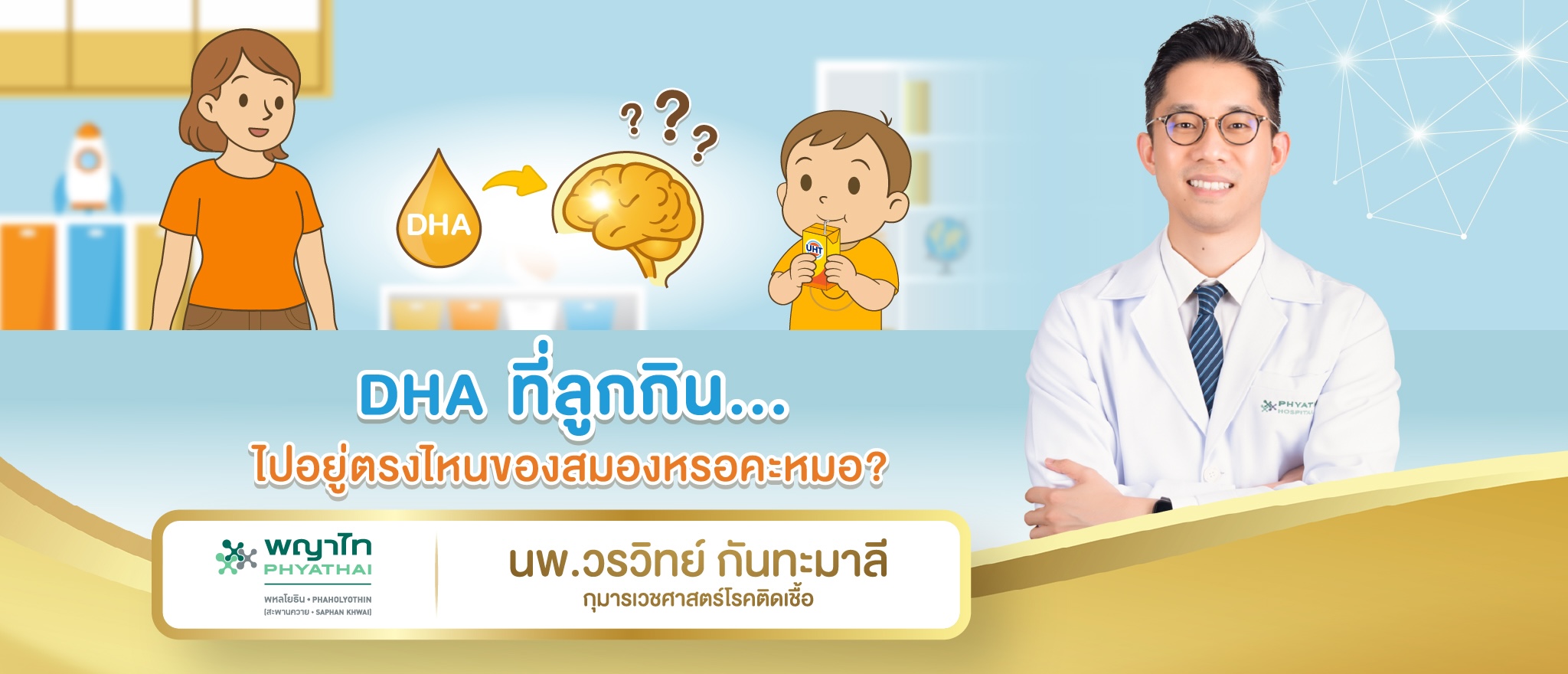
Where does the DHA that children consume end up in their brains?
These are the most frequently asked questions doctors receive.
Mother: "Doctor, my child takes DHA every day... but still speaks slower than his friends. Why is that?"
Doctor: Because many households provide the same DHA, but the results are not the same. The answer isn't about "whether or not to consume it," but about where the DHA works and whether there's enough of it.
Where exactly is DHA located in a baby's brain?
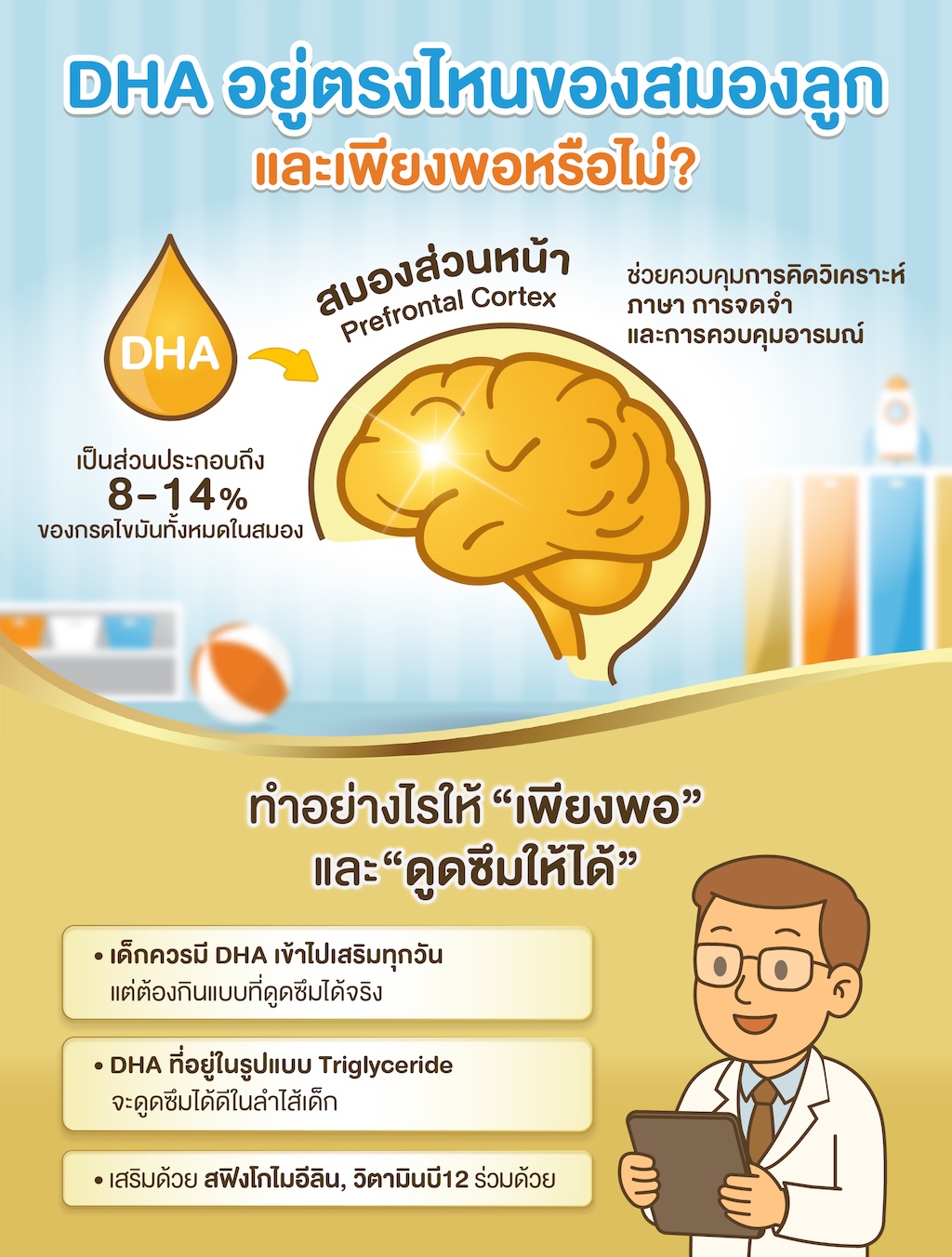
Doctor: The frontal lobe, which controls cognitive processes, language, memory, and emotional regulation, contains 8-14% DHA of all the fatty acids in the newborn brain [1]. While a baby's brain has many parts, the "center of thought, language, and emotion" is the cerebral cortex.
Mother: So, what is the function of DHA?
Doctor: Simply put, DHA is a crucial building block that the brain uses to connect the fibers of thought.
What happens if you are deficient in DHA?
Doctor: When the brain is expanding its network, and without DHA, which is like the bricks that provide the structure for quick signal transmission, the result is…
- Language and memory development may be slower than normal.
- My emotional control system isn't very accurate yet.
- Risk of developing ADHD when attending school.
Mother: Do we need to give our child DHA every day?
Doctor: Studies have shown that inconsistent or insufficient DHA intake during the ages of 1–3 may affect brain connections, and recovery may take time and may not be complete. [2]
DHA must be "consumed in sufficient quantities" and "absorbed effectively."
Doctor: The brain creates new nerve fibers every day, so children should receive daily DHA supplementation, but it must be in a form that is actually absorbed, such as:
Mother: Like what, doctor?
Doctor: DHA that is effectively absorbed can be supplemented in the following ways:
- DHA in the form of triglyceride is well absorbed in the intestines of children [3].
- Supplement with Sphingomyelin and Vitamin B12 to promote the complete regeneration of nerve endings.
The doctor would like to summarize:
DHA isn't a smart-boosting drug, but rather a fundamental building block for 'intellectual connection' that can never be started over. The sooner you supplement, the further you can connect your thoughts compared to others.
Mother: Do you have any recommendations for taking DHA, doctor?
Doctor: I recommend the following:
- Check how many milligrams of DHA are in each serving of the milk or supplement you consume.
- Choose DHA that also contains other nutrients to support brain development, such as sphingomyelin and vitamin B12.
- Consume DHA regularly during the ages of 1–3 years, as this is the period when the brain develops its neural networks most rapidly.
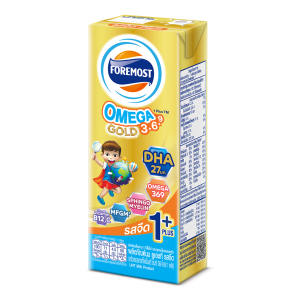
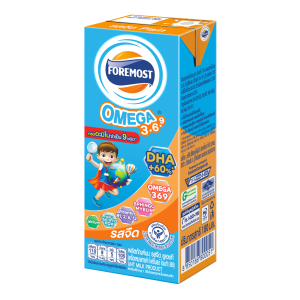
Mothers can choose to give their children UHT milk fortified with nutrients designed for brain development. It should contain DHA, Sphingomyelin, and Vitamin B12 as key components, as these are nutrients that "a child's brain truly needs."
Dr. Worawit
Kanthamalee
Pediatric Infectious Diseases
Phyathai Phaholyothin Hospital
Dr. Worawit
Kanthamalee
Pediatric Infectious Diseases
Phyathai Phaholyothin Hospital
Written by:
Dr. Worawit
Kanthamalee
Pediatric Infectious Diseases
Phyathai Phaholyothin Hospital
References:
1. Lauritzen L, et al. The essentiality of long chain n–3 fatty acids in relation to development and function of the brain and retina. Progress in Lipid Research (2001)
2. Innis SM. Impact of maternal diet on human milk composition and neurological development of infants. The American Journal of Clinical Nutrition (2007)
3. Dyerberg, J., Madsen, P., Møller, J. M., Aardestrup, I., & Schmidt, E. B. (2010). Bioavailability of marine n-3 fatty acid formulations. Prostaglandins, Leukotrienes and Essential Fatty Acids, 83(3), 137–141.