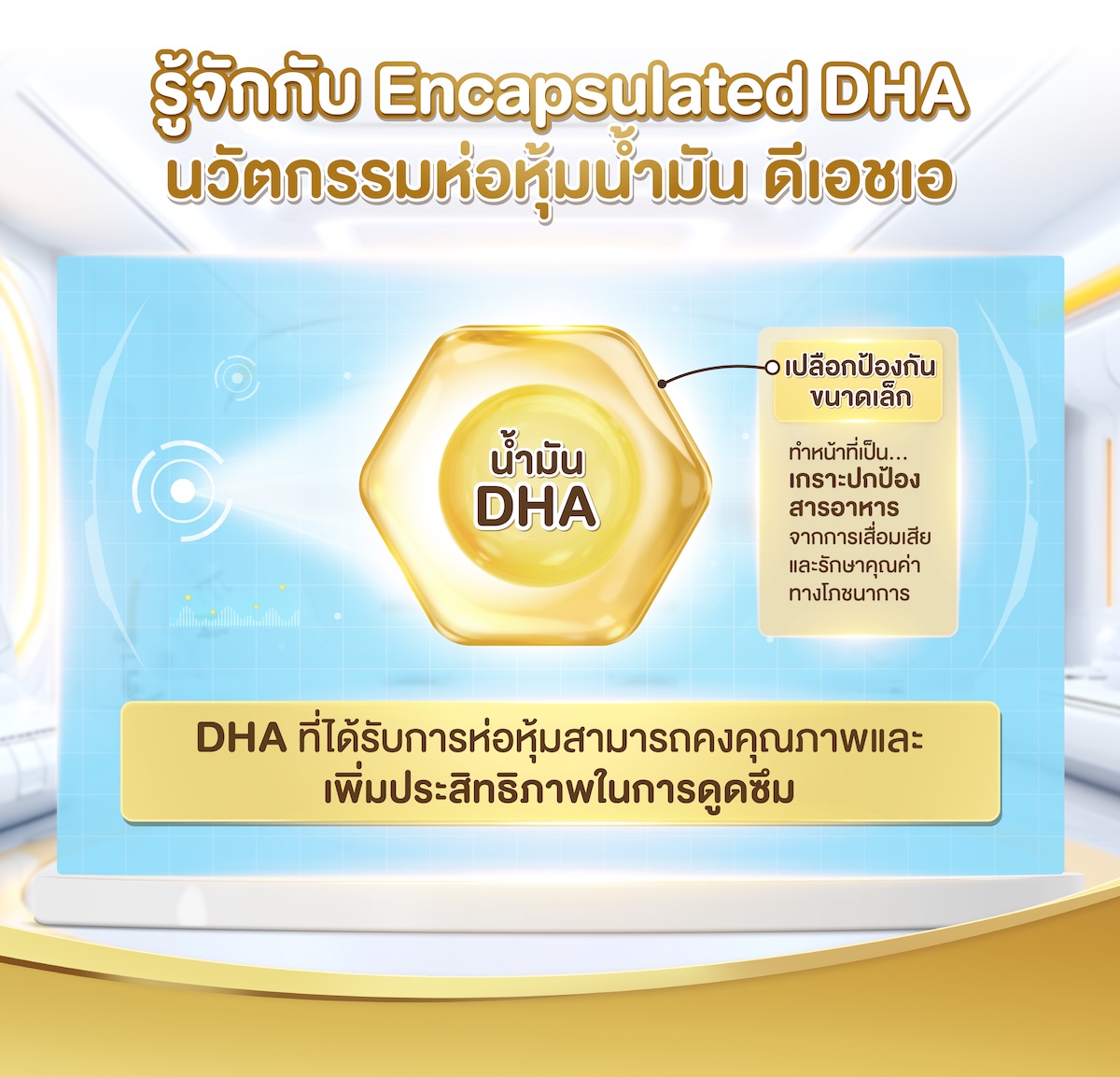
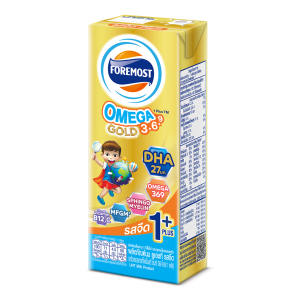
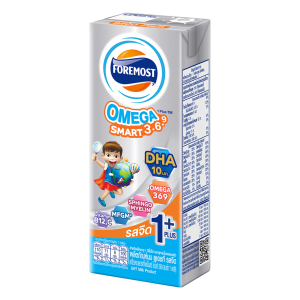
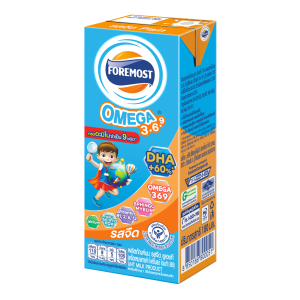
Get to know... Encapsulated DHA, an innovation for nourishing your child's brain.
DHA (Docosahexaenoic Acid) is an omega-3 fatty acid that is important for brain and nervous system function, especially in young children. DHA is an important component of brain cells and the retina, playing a role in brain and vision development. Research has shown that DHA accumulates rapidly in the brain during early childhood, and adequate DHA intake is associated with long-term learning and brain function development [1,2].
However, conventional DHA has limitations as it is easily degraded when exposed to air, heat, or light, which can reduce its nutritional value and cause an unpleasant odor during milk production and storage [3]. This problem has led to the development of innovative Encapsulated DHA.
Encapsulated DHA = Armored DHA
Encapsulated DHA is the process of encapsulating DHA in a very small protective shell (matrix powder) [4] to help protect the DHA from degradation factors. This advanced technology protects the nutrient from oxidation (degradation), preserves its nutritional value, and prevents the fishy odor often found in conventional DHA oils [5]. Food science research indicates that encapsulated DHA can maintain better quality and stability than conventional, unencapsulated DHA [6] .
High DHA content alone isn't enough; it also needs to be easily absorbed!
Encapsulated DHA is a technology that helps DHA be absorbed into the body more efficiently. Nutritional research has found that when DHA is in a protected form, it can be absorbed and used by the body more efficiently, resulting in higher blood DHA levels [7,8].
Once absorbed, DHA is incorporated into the structure of brain cells, supporting brain and nervous system function, facilitating connections and information transmission between brain cells, which is crucial for your baby's learning, memory, and responsiveness to their surroundings. In addition, DHA plays a role in the development of the eyes and the overall nervous system and does not negatively affect physical growth. [2,9]
summarize
Encapsulated DHA is another option for mothers to preserve the nutritional value of DHA for the healthy growth of their children.
Dr. Wannapa
Puranawattanakul
Neonatal and Perinatal Pediatrician
Kasemrad International Hospital, Rattanathibet
Dr. Wannapa
Puranawattanakul
Neonatal Pediatrician
and birth
Kasemrad Hospital
International Rattanathibet
Dr. Wannapa
Puranawattanakul
Neonatal and Perinatal Pediatrician
Kasemrad International Hospital, Rattanathibet
reference
1. Innis, S.M. (2007). Dietary omega-3 fatty acids and the developing brain. Brain Research, 1237, 35–43.
2. Hadley, K.B., Ryan, A.S., Forsyth, S., Gautier, S., & Salem, N. (2016). The essentiality of DHA for infant development. Prostaglandins, Leukotrienes and Essential Fatty Acids, 105, 13–21.
3. McClements, D.J., & Decker, E.A. (2018). Lipid oxidation in food emulsions. Critical Reviews in Food Science and Nutrition, 58(15), 2360–2376.
4. 1. Kaushik, P., Dowling, K., Barrow, C. J., & Adhikari, B. (2015). Microencapsulation of omega-3 fatty acids: A review of microencapsulation and characterization methods. Journal of Functional Foods, 19, 868-881.
5. FrieslandCampina Ingredients. (nd). Encapsulates: High quality, stable and nutritional lipids. Retrieved from
6. Comunian, TA, & Favaro-Trindade, CS (2021). Encapsulation of eicosapentaenoic acid (EPA) and docosahexaenoic acid (DHA) for food fortification: A review. Trends in Food Science & Technology, 114, 43–56.
7. Forsyth, S., et al. (2016). Dietary DHA and infant blood fatty acid status. Nutrients, 8(2), 99.
8. Kidd, P.M., et al. (2020). Bioavailability of protected DHA. Nutrients, 12(1), 248.
9. Birch, E. E., et al. (2007). DHA supplementation and neurodevelopment in infants. Developmental Medicine & Child Neurology, 49(1), 4–9.