





A pregnant woman smiles as she caresses her belly, accompanied by icons of a fetus, a newborn, and a toddler. The message: “When do a child’s first 1,000 days begin?” By Dr. Thanyalak Ratisukpimol

When Do a Child’s First 1,000 Days Begin, and Why Is It Important to Start Preparing Before Conception?

When do a child’s first 1,000 days begin?

The “first 1,000 days” do not begin on the day the baby is born, but rather start from the first day of conception (approximately 270 days) and continue until the child turns 2 years old (730 days) This totals exactly 1,000 days, a period that medical experts refer to as the “Golden Window,” which has a lifelong impact on health and brain development [1, 2]

Infographic: A Child’s First 1,000 Days—When Does the Count Begin? Stage 1: In Utero, Days 1–270 (9 months)—Organ, brain, and nervous system development · Stage 2: Newborn to 1 year old (271–635 days): Millions of neural connections and neurons are formed · Stage 3: 1–2 years old (636–1,000 days): The brain grows rapidly to 80% of its adult size

How to Count the First 1,000 Days of Your Child's Life

  • Stage 1: In utero (approximately 0–270 days, or 9 months), beginning at conception, is the period during which organ structures, brain cells, and the central nervous system are formed. The health and development of the fetus depend directly on the mother’s nutrition, emotional well-being, and rest[3, 4]
  • Stage 2: Birth to 1 year ( 271–635 days)—a period of rapid growth. The brain rapidly forms millions of synapses every second, while the baby receives immunity through breast milk. This is also a critical period for establishing secure emotional bonds [5, 6]
  • Stage 3: The transition to ages 1–2 ( 636–1,000 days). The brain grows rapidly, reaching approximately 80% of its adult size, while communication, motor, and social learning skills develop by leaps and bounds .[7]

The first 1,000 days are therefore considered the most important “foundation for life.” If mothers lay a solid foundation for attentive care while their child is still in the womb, it is like giving a precious gift that will stay with the child as they grow up [8]

So why should mothers start preparing even before they get pregnant?

Preparing your body andmind in advance is likepreparingthe soil before planting seeds. It helps increase the chances of a safe pregnancy, reduce complications, and ensure your child’s health and well-being from the very first cell [9]

1. Store nutrients for brain cell development

  • Folic Acid: You should start taking it at least 1–3 months before conception to help your body prepare for the closure of the fetal neural tube during the fourth week of pregnancy. This can reduce the risk of birth defects, such as spina bifida, by as much as 50–70%[10, 11, 12]
  • Iron and Iodine: Iron helps transport oxygen to the uterus and ovaries, reducing the risk of anemia[13]. Iodine plays a key role in the production of thyroid hormones, which regulate brain growth and your child’s intellectual development (IQ) [14].
  • Omega-3 (DHA): Building up DHA stores in the mother’s body in advance helps ensure that the baby’s brain and retinal cells are fully prepared for development as soon as conception occurs, and also reduces the risk of preterm birth [15, 16]

2. Preparing for Your First Pregnancy (Uterus and Hormones)

  • Maintain a healthy body weight within the appropriate body mass index (BMI) range to reduce the risk of gestational diabetes and high blood pressure/preeclampsia [17, 18]
  • Regular exercise helps improve blood flow to the reproductive system, balances hormones, and prepares the body for successful embryo implantation [19]
Dr. Thanyalak Rati Sukphimol, author of the article
Dr. Thanyalak
Ratisuk Pimol
Written by:
Obstetrics and Gynecology—Maternal and Fetal Medicine
Dr. Thanyalak Rati Sukphimol, author of the article
Dr. Thanyalak Ratisuk Pimol

, and Fetal Medicine
Dr. Thanyalak Rati Sukphimol, author of the article
Written by:
Dr. Thanyalak
Ratisuk Pimol
Obstetrics and Gynecology—Maternal and Fetal Medicine

reference

  1. Black, R. E., et al. (2013). Maternal and child undernutrition and overweight in low- and middle-income countries. The Lancet, 382(9890), 427–451.
  2. Cusick, S. E., & Georgieff, M. K. (2016). The role of nutrition in brain development: the golden opportunity of the first 1,000 days. The Journal of Pediatrics, 175, 16–21.
  3. Barker, D. J. (1990). The fetal and infant origins of adult disease. BMJ, 301(6761), 1111–1112.
  4. Schwarzenberg, S. J., & Georgieff, M. K. (2018). Advocacy for improving nutrition in the first 1,000 days: supporting child health and development. Pediatrics, 141(2), e20173716.
  5. Shonkoff, J. P., et al. (2012). The lifelong effects of early childhood adversity and toxic stress. Pediatrics, 129(1), e232-e246.
  6. Victora, C. G., et al. (2016). Breastfeeding in the 21st century: epidemiology, mechanisms, and lifelong effects. The Lancet, 387(10017), 475–490.
  7. Knickmeyer, R. C., et al. (2008). A structural MRI study of human brain development from birth to age 2. Journal of Neuroscience, 28(47), 12176–12182.
  8. UNICEF. (2013). The First 1,000 Days of Life: The Brain’s Window of Opportunity. UNICEF Health Report.
  9. Stephenson, J., et al. (2018). Before the beginning: nutrition and lifestyle during the preconception period and their importance for future health. The Lancet, 391(10132), 1830–1841.
  10. MRC Vitamin Study Research Group. (1991). Prevention of neural tube defects: results of the Medical Research Council Vitamin Study. The Lancet, 338(8762), 131–137.
  11. Czeizel, A. E., & Dudas, I. (1992). Prevention of the first occurrence of neural-tube defects through periconceptional vitamin supplementation. New England Journal of Medicine, 327(26), 1832–1835.
  12. World Health Organization (WHO). (2012). Guideline: Optimal serum and red blood cell folate concentrations in women of reproductive age for the prevention of neural tube defects.
  13. Christian, P., et al. (2014). Risk of childhood undernutrition associated with small-for-gestational age and preterm birth in low- and middle-income countries. International Journal of Epidemiology, 43(1), 113–123.
  14. Bath, S. C., et al. (2013). Effect of inadequate maternal iodine status during pregnancy on cognitive outcomes in children: results from the ALSPAC cohort study. The Lancet, 382(9889), 331–337.
  15. Innis, S. M. (2007). Dietary (n-3) fatty acids and brain development. The Journal of Nutrition, 137(4), 855-859.
  16. Carlson, S. E., et al. (2013). DHA supplementation and pregnancy outcomes. The American Journal of Clinical Nutrition, 97(4), 808-815.
  17. Poston, L., et al. (2016). Preconception and maternal obesity: epidemiology and health consequences. The Lancet Diabetes & Endocrinology, 4(12), 1025–1036.
  18. Fleming, T. P., et al. (2018). Origins of lifetime health around the time of conception: causes and consequences. The Lancet, 391(10132), 1842–1852.
  19. Evenson, K. R., et al. (2014). Guidelines for physical activity during pregnancy: comparisons from around the world. American Journal of Lifestyle Medicine, 8(2), 102–121.

Frequently Asked Questions

The “first 1,000 days” period does not begin on the day the child is born, but rather starts on the first day of conception (approximately 270 days) and continues until the child turns 2 years old (730 days), totaling exactly 1,000 days.
Preparing both your body and mind in advance helps increase your chances of a safe pregnancy, reduce complications, and ensure your child’s health and well-being from the very first cell.
Folic acid, iron, iodine, and omega-3 are essential nutrients for expectant mothers to help prepare for their baby

View more product details

Share

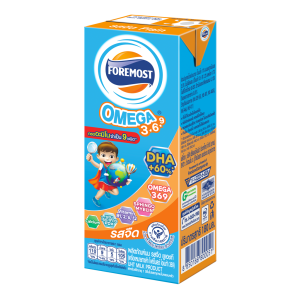
Add to cart now! Get an instant discount of 20 baht per case on Foremost Omega 369 Original Flavor, 180 ml.

Accumulate purchase points, upgrade your membership level, and receive exclusive additional discounts.

The first 220 orders: Spend 2,990.- and get a free Omega Smart Inventor Explorer Table worth 890.-!

Members can use discount coupons at checkout when purchasing items totaling 1,000 baht or more.