Child development in Gen Alpha at age 3 that mothers should know.

Child Development at 3 Years Old: Gen Alpha Child Development
Things every mother should know about their 3-year-old!

The developmental milestone of a 3-year-old is considered a crucial time when mothers will clearly see changes in their child's physical and brain development, as well as increased emotional expression. At this age, children can begin engaging in a wide variety of activities, possess enhanced motor skills, and participate in outdoor activities to promote learning. Therefore, a 3-year-old developmental checklist is a tool to help mothers observe and support their child's appropriate growth. Development is categorized into four areas: physical development, intellectual development, emotional development, and cognitive and communication skills.

Checklist of four developmental milestones for 3-year-olds.

Child Development Checklist for 3-Year-Olds: 4 Key Areas

  1. Gross Motor Development [11,13]
    • Able to stand on one leg for 2-3 seconds – practice balance walking.
    • Riding a tricycle – Your child will develop a certain level of balance, with you providing support initially. After that, let your child learn to balance on their own.
    • Ascend the stairs alternating feet – using the handrail for balance assistance.
  2. Fine Motor Development [11,13,15]
    • Draw a circle using the example – Mom can draw an example and hold the child's hand to teach them. Afterward, let the child try drawing on their own and spend time practicing.
    • Stack at least eight 1-inch wooden blocks high – Mom can demonstrate so the child can try it themselves.
    • Draw a person's figure (1-2 parts).
  3. Language Development [6,14]
    • Know at least one color.
    • Start by asking "what" and "why."
    • You can say it in short sentences, such as "I'm hungry."
    • It can execute 2-3 commands consecutively.
  4. Social-Emotional Development and self-help [12,13,14,16]
    • They can engage in pretend play, such as telling stories about cooking.
    • They can play with others and share things with others.
    • They begin to feel pride, guilt, learn to wait, and are able to perceive the happiness of others.
    • Can take off their own shoes and put on their own crew-neck t-shirt.
The above checklist of child development for 3-year-olds will help mothers observe their children's development more clearly. However, each child's development may vary depending on many factors such as the child themselves, upbringing, environment, and nutrition. Therefore, if mothers observe or have any concerns about their child's development, they should record and collect this information to consult with a doctor or child development specialist.

Support your 3-year-old's development with complete nutrition [1,2,3,4,5,6,7,8,9,10].

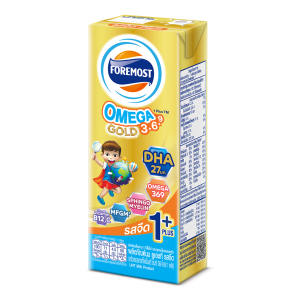
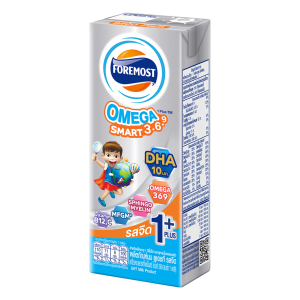
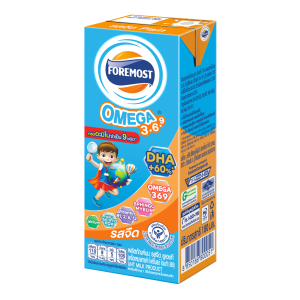
Why are nutrients essential for a child's development? Because ensuring a child receives complete and sufficient nutrition and energy is a crucial factor in promoting physical development, brain function, and a strong immune system. Therefore, mothers should ensure their children eat a balanced diet from all five food groups and supplement it with fortified UHT milk containing GOS BIO-ACTIVE and Vitamin C to boost immunity and prepare them for learning outside the home. This milk also includes nutrients that support brain development, such as DHA, sphingomyelin, MFGM, Omega 3, 6, and 9, Vitamin B12, and choline, as well as calcium for strong bones and teeth.

In summary, at the age of 3, children learn from their surroundings. Their bodies grow rapidly, and they understand and express emotions more clearly. Taking children outdoors promotes development, but it also exposes them to germs and pollutants. Therefore, mothers should use protective equipment and ensure proper nutrition, including a balanced diet with all five food groups, and supplement with UHT milk fortified with GOS BIO-ACTIVE and Vitamin C to boost their immunity. When children are healthy, they are better prepared to learn new things effectively.

Dr. Nattawan Charuwarapolkul

Dr. Nattawan
Charuwarakul

Written by:

Developmental and Behavioral Pediatrician
Phyathai 3 Hospital

Dr. Nattawan Charuwarapolkul

Dr. Nattawan
Charuwarakul

Developmental pediatrician
And behavior.
Phyathai 3 Hospital

Dr. Nattawan Charuwarapolkul

Written by:

Dr. Nattawan
Charuwarakul

Developmental and Behavioral Pediatrician
Phyathai 3 Hospital

reference

1. Bourlieu, C., Ménard, O., Bouzerzour, K., Mandalari, G., Macierzanka, A., & Dupont, D. (2020). Milk fat globule membrane: The role of its various components in infant nutrition. Journal of Nutritional Biochemistry, 85, 108465. https://doi.org/10.1016/j.jnutbio.2020.108465

2. Carr, A.C., & Maggini, S. (2017). Vitamin C and immune function. Nutrients, 9(11), 1211. https://doi.org/10.3390/nu9111211

3. Deoni, SCL, O'Muircheartaigh, J., Elison, JT, Walker, L., Doernberg, E., Waskiewicz, N., Dirks, H., Piryatinsky, I., Dean, D.C., Jumbe, NL, & Adams, SH (2019). Sphingomyelin in brain and cognitive development: Preliminary data. eNeuro, 6(4), ENEURO.0421-18.2019. https://doi.org/10.1523/ENEURO.0421-18.2019

4. EFSA Panel on Dietetic Products, Nutrition and Allergies (NDA). (2014). Scientific opinion on the substantiation of a health claim related to DHA and contribution to normal brain development pursuant to Article 14 of Regulation (EC) No 1924/2006. EFSA Journal, 12(10), 3840. https://doi.org/10.2903/j.efsa.2014.3840

5. EFSA Panel on Dietetic Products, Nutrition and Allergies (NDA). (2016). Scientific opinion on dietary reference values for choline. EFSA Journal, 14(8), 4484. https://doi.org/10.2903/j.efsa.2016.4484

6. Frankenburg, W. K., Dodds, J., Archer, P., Shapiro, H., & Bresnick, B. (1992). The Denver II: A major revision and restandardization of the Denver Developmental Screening Test. Pediatrics, 89(1), 91–97.

7. Innis, S.M. (2007). Omega-3 fatty acids and neural development to human infancy. British Journal of Nutrition, 98(S1), S5–S10. https://doi.org/10.1017/S0007114507832895

8. Lomax, A.R., & Calder, P.C. (2009). Prebiotics, immune function, infection and inflammation: A review of the evidence. British Journal of Nutrition, 101(5), 633–658. https://doi.org/10.1017/S0007114508055608

9. Munns, CF, Shaw, N., Kiely, M., Specker, BL, Thacher, TD, Ozono, K., Michigami, T., Tiosano, D., Mughal, MZ, Mäkitie, O., Pettifor, JM, Seth, A., Idris, HW, Bhatia, V., Fu, J., Goldberg, G., Bonjour, J.-P., Braegger, C.P., Ward, L., … & Hochberg, Z. (2016). Global consensus recommendations on prevention and management of nutritional rickets. Journal of Clinical Endocrinology & Metabolism, 101(2), 394–415. https://doi.org/10.1210/jc.2015-2175

10. Winje, B.A., Kumar, A., Taneja, S., Bhandari, N., Bahl, R., Strand, TA, & Bhandari, N. (2018). Does early vitamin B12 supplementation improve neurodevelopment and cognitive function in infants? American Journal of Clinical Nutrition, 108(6), 1234–1243. https://doi.org/10.1093/ajcn/nqy219

11. Jariya Chutaphisit and Sureelak Sujaritpong. (2013). Normal Development. In Tippawan Hansakunachai, Rawiwan Roongpraiwan, Sureelak Sujaritpong and Weerasak Cholchaiya (editors), Textbook of Child Development and Behavior Volume 3: Caring for Healthy Children (pp. 39–52). Bangkok: Beyond Enterprise Co., Ltd.

12. Chuthamas Worachotkamjorn. (2013). Emotional and social development. In Tippawan Hansakunachai, Rawiwan Rungpraiwan, Sureelak Sujaritpong and Weerasak Cholchaiya (editors), Textbook of Child Development and Behavior Volume 3: Caring for Healthy Children (pp. 53–65). Bangkok: Beyond Enterprise Co., Ltd.

13. Nittaya Kochapakdee. (2008). Child development. In Nichara Ruangdarakanon, Chakriya Theeranet, Rawiwan Roongpraiwan, Tippawan Hansakunachai, and Nittaya Kochapakdee (eds.), Textbook of Development and Behavior (1st ed., pp. 389–390). Bangkok: Holistic Publishing.

14. Pongsak Noipayak and Dusadee Ngernlangtawee. (2018). Child development. In Sureelak Sujaritpong, Rawiwan Rungpraiwan, Tippawan Hansakunachai, Banchuen Benjasuwanthep, Adisuda Fuengfu, Jariya Chutapissit, and Pat Rojmahamongkol (eds.), Textbook of Child Development and Behavior (Vol. 4, 1st ed., pp. 365–381). Bangkok: P.A. Living Co., Ltd.

15. Isarapha Chinsuwan. (2014). Guidelines for promoting child development in Thai society (0–10 years). In Pongsak Noipayak, Winadda Piyasilp, Wandee Ningsanont, and Prasobsri Ungthavorn (eds.), Guideline in child health supervision (1st ed., pp. 21–29). Bangkok: Sarppasarn Co., Ltd.; published by the Royal College of Pediatricians of Thailand.

16. Bureau of Health Promotion, Department of Health. (2014). Handbook for Promoting Child Development from Birth to 5 Years for Caregivers in Families and Childcare Centers (1st ed., pp. 16–19). Kaew Chao Chom Printing Media Center, Suan Sunandha Rajabhat University. Retrieved from https://hp.anamai.moph.go.th

17. Bureau of Health Promotion, Department of Health. (2014). Handbook for Promoting Child Development from Birth to 5 Years for Caregivers in Families and Childcare Centers (1st ed., pp. 16–19). Kaew Chao Chom Printing Media Center, Suan Sunandha Rajabhat University. Retrieved from https://hp.anamai.moph.go.th

View more product details

Share

Accumulate purchases, increase membership level, and receive special discounts

เมื่อซื้อขั้นต่ำครบ 2,990.- รับฟรี! ของแถมตลอดทั้งเดือน เฉพาะวันที่ 1 ก.พ. 69 – 14 ก.พ. 69

Members can use the discount coupon at the checkout page. When purchasing products of 1,000 Baht or more.