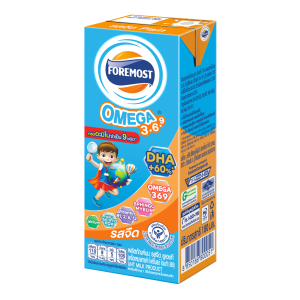
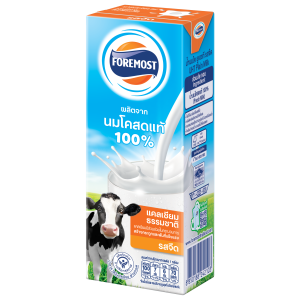
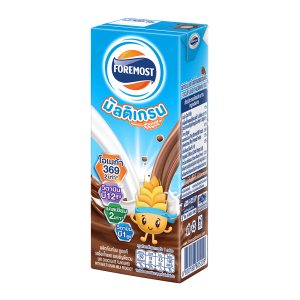
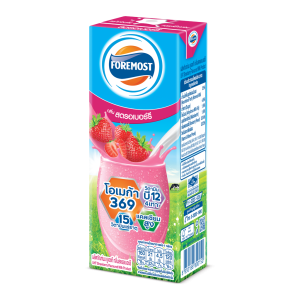
Child Development from 1 Year Old and Up: How to Train Your Child to Drink UHT Milk to Support Physical Development , Nourish the Brain, and Boost Immunity.
Why should you encourage your child to drink UHT milk?
According to recommendations from the American Academy of Pediatrics, the American Dental Association, and the American Dietetic Association, as well as the American Academy of Pediatrics of Thailand, it is recommended that children 1 year and older be weaned off bottles [4]. Training your child to drink at this age will promote their physical development and also plays an important role in their behavior and emotional development.
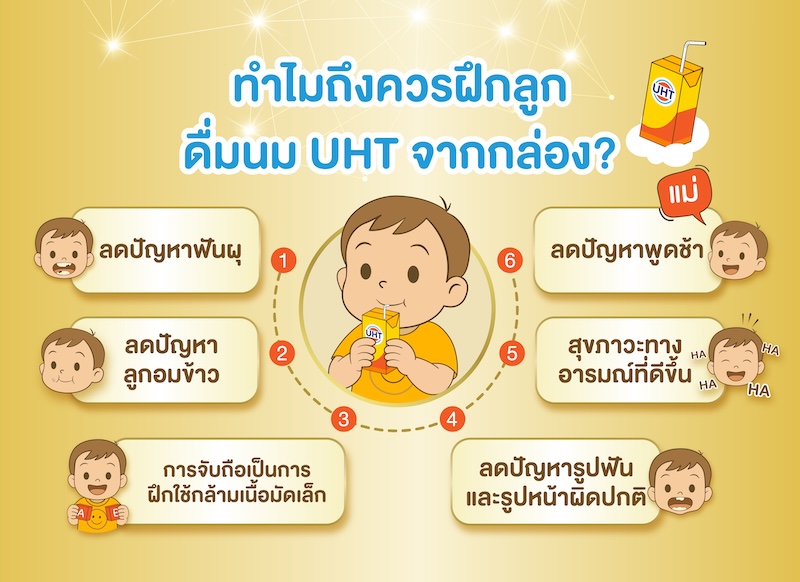
The benefits of training children to drink UHT milk from cartons, in terms of physical, behavioral, and emotional development.
- Good physical development – Holding a box or cup is a way to train your child's fine motor skills to develop strong muscles [3].
- Good dental health – Reduce the risk of cavities from using bottles for too long [1]
- Oral and facial development is normal – prolonged bottle feeding can cause malocclusion and jaw development, resulting in protruding upper front teeth, lower lower front teeth, and malocclusion. This can also lead to delayed speech development and unclear speech, affecting the child's personality. [1]
- Good eating habits – Children aged 1 year should eat three meals a day and have all five food groups each day. Drinking milk is part of supplementing nutrients. Children who are attached to bottles often refuse to eat rice and are used to eating liquid foods, disliking foods that require chewing, thus causing problems. The child is a picky eater and refuses food, likes to hold rice in their mouth, leading to unhealthy eating habits [2].
- Good emotional health – Bottle-dependent children may use their bottles as a source of comfort or a way to relieve frustration, instead of practicing talking to resolve their frustrations. [3]
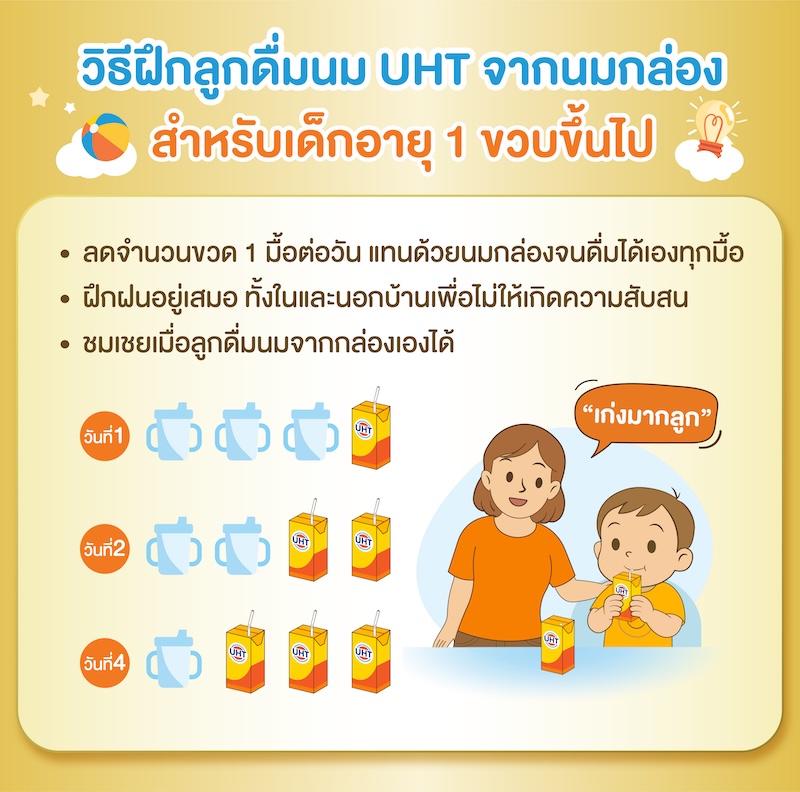
How to train your child to drink UHT milk from a carton (for children aged 1 year and older).
- Reduce the amount of milk consumed from a bottle by replacing it with carton milk until your child can drink from a carton independently at every meal. Start by eliminating milk from a bottle during the meal your child is least attached to, which is usually lunchtime.
- Practice drinking milk from a carton regularly. Everyone in the family should cooperate and follow the same guidelines, both at home and outside, to avoid confusing the child.
- Praise your child when they can drink milk from the carton by themselves, or perhaps give them a small reward.
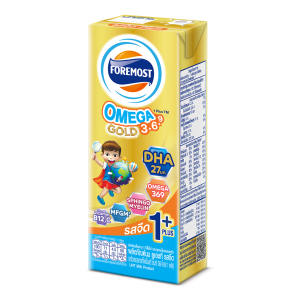
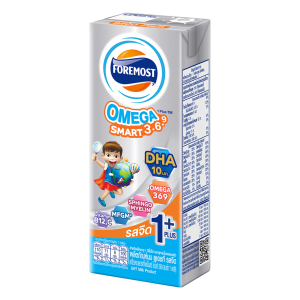
In summary , when your child is one year old, start introducing UHT milk from cartons. This helps support physical development and improves their ability to learn self-care in daily life. It's also a way to reduce the risk of tooth decay that can result from prolonged bottle feeding. Transitioning from bottles to cartons at the appropriate age is a crucial developmental step that parents shouldn't overlook. The UHT milk you choose should be fortified with more than five essential brain-boosting nutrients, including GOS BIO-ACTIVE and Vitamin C, to strengthen your child's immune system. When your child is healthy, they are ready to learn to their full potential.
Dr. Thitiorn
Naga Boonnam
Pediatric Infectious Disease Specialist
Phyathai 3 Hospital
Dr. Thitiorn
Naga Boonnam
Pediatrician
Infectious Diseases Branch
Phyathai 3 Hospital
Written by:
Dr. Thitiorn
Naga Boonnam
Pediatric Infectious Disease Specialist
Phyathai 3 Hospital
reference
1. Pichaya Klinhom. Research Report: Knowledge and Beliefs Regarding the Use of Baby Bottles to Feed Children Aged 2-4 Years at the Early Childhood Brain Skills Development Demonstration Center, Public Health Center No. 10, Ubon Ratchathani. Department of Health, Ministry of Public Health; 2024.
2. Umaporn Suthatvorawut, Supaporn Tantrachivathorn, Somchok Khunsanong, Editors. Age-Appropriate Nutrition Guide for Infants and Young Children. Bangkok: Beyond Enterprise; 2009.
3. American Academy of Pediatrics. Weaning From the Bottle – 12 Months or Older. Pediatric Patient Education. 2024. doi:10.1542/ppe_schmitt_279
4. Siraporn Sawadiwor, Pranee Muangnoi, Prapai Chunhaklai. Infant and Young Child Care. 2007b:7.